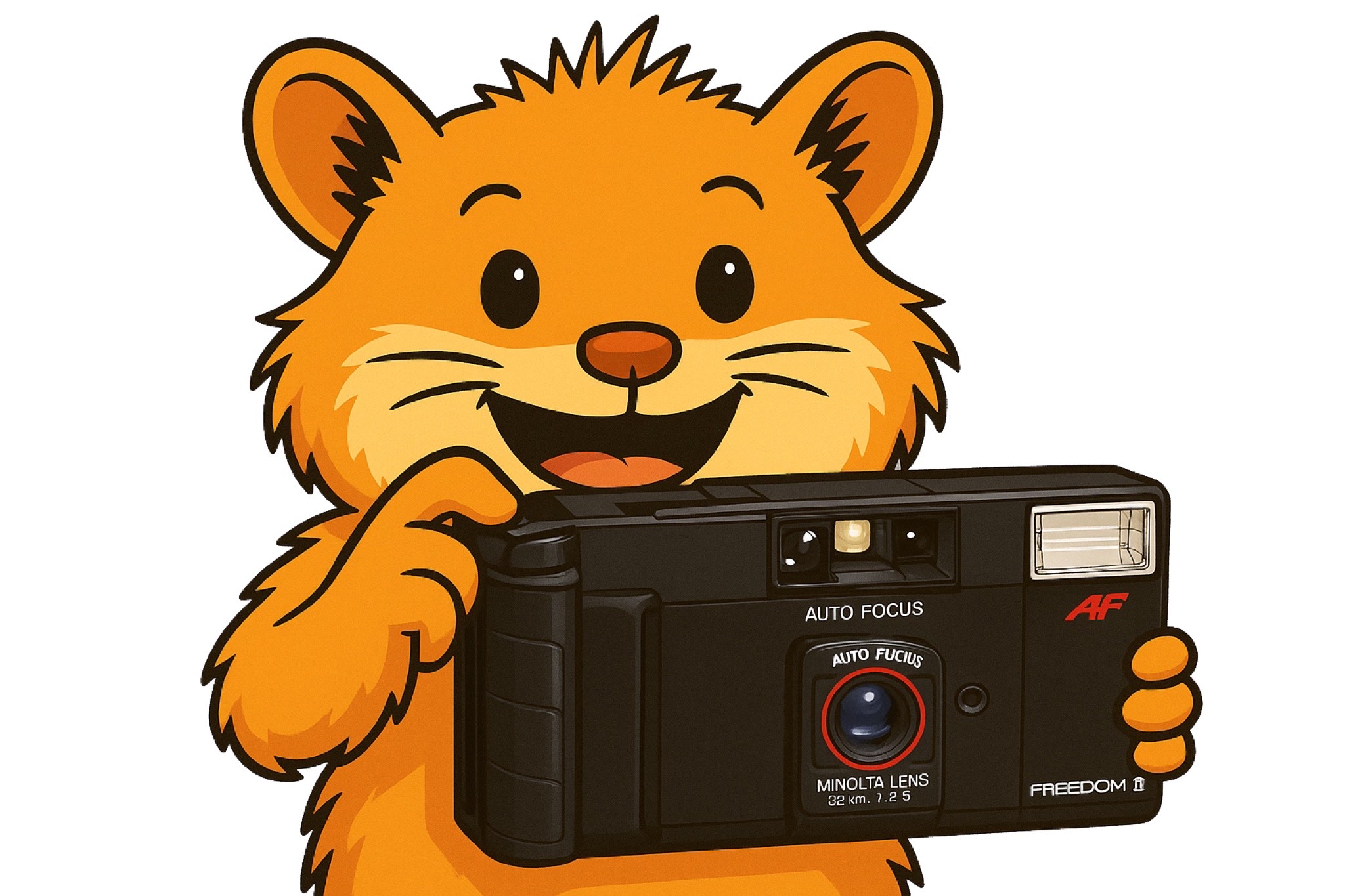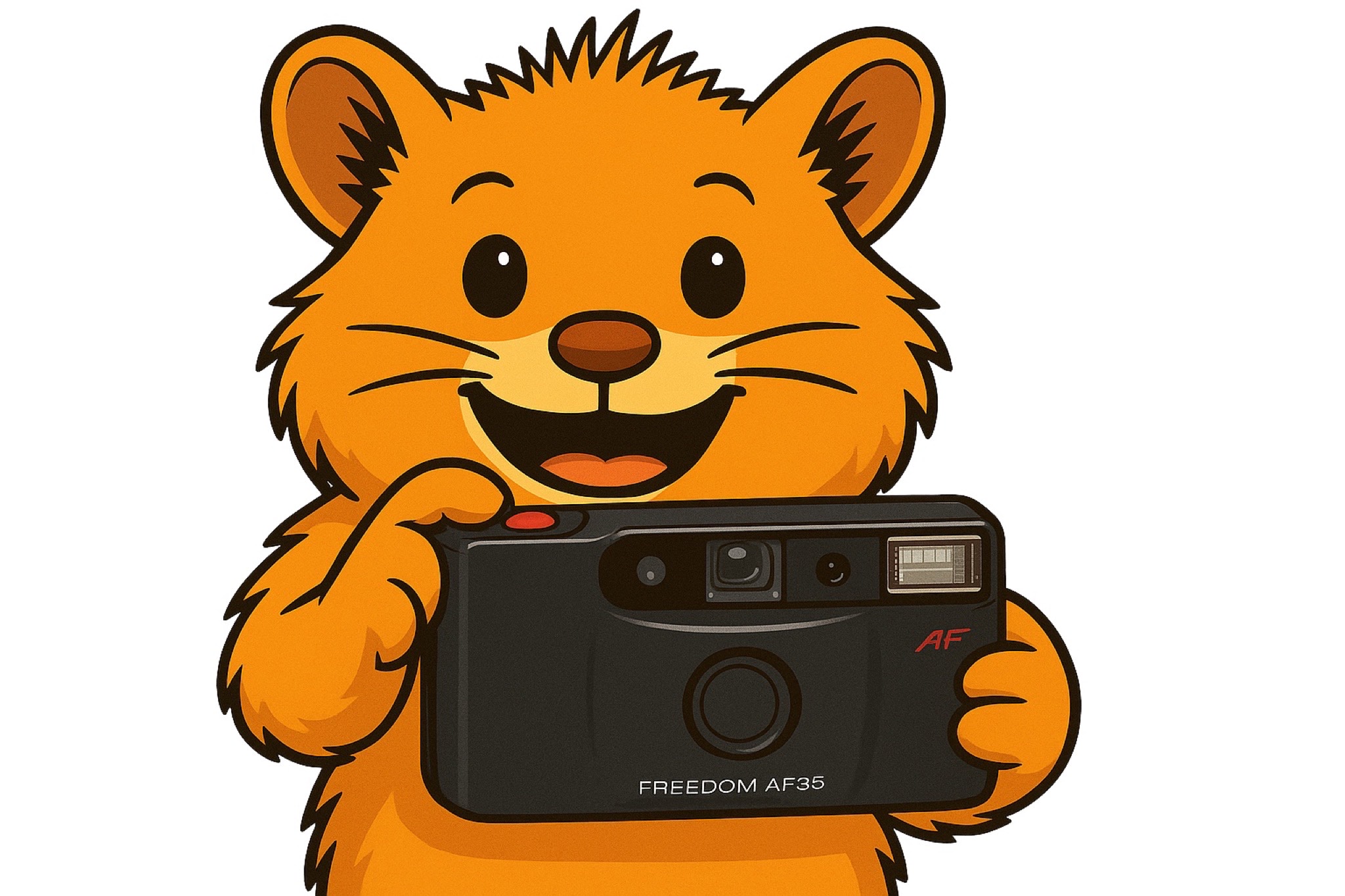
The Minolta Freedom Tele was a camera introduced by Minolta in the 1980s as a snapshot camera. In Europe it was offered under the name Minolta AF-Tele Super, while in Japan it was known as the Minolta Mac-Tele. There was also a variant with a data back and the Leica AF-C1 was also developed based on this model.
The camera has a fixed lens with two selectable focal lengths. A normal lens with 38 mm and a maximum aperture of f/2.8 or an 80 mm lens with a maximum aperture of f/5.6 for portrait photography.
The focus is automatically set by the camera technology and the minimum distance to the subject should be 70 cm. There is no manual focus adjustment option.
The general settings of the photo camera cannot be adjusted manually, as the aperture and shutter speed are set automatically. The film speed is detected by the camera based on the encoding on the film cartridge and supports values from ISO 50 to ISO 3200. If the film has no encoding or is outside this range, the default value of ISO 100 is used.
The camera has a built-in flash that fires automatically, but can also be activated manually.
For stability and flexibility when shooting, there is a tripod connection on the bottom of the camera body. Additionally, there is a self-timer with a 10-second lead time, ideal for group shots or selfies.
According to the manual, the Minolta Freedom Tele measures 13.6 x 7.6 x 5.5 cm and weighs 450 grams. It is powered by a 2CR5 battery (eBay / Amazon*), which also powers the LCD display that shows information such as the number of pictures taken.
Films for the Minolta Freedom Tele
The Minolta Freedom Tele is a camera specifically designed to use 35mm film, as stated in its manual. The 35mm format is still very popular due to its simplicity and reliability. There are still several manufacturers that produce film for this format. A good choice for color images is the Kodak Ultramax 400*, while the Ilford Delta 100* is good for black and white images. Of course, there are other films from various manufacturers to choose from.
The common development process for color film in 35mm format is the C-41 process, which is offered by most photo labs. In Germany, for example, films can be dropped off for development at many drugstore chains. The development steps for black-and-white film are slightly different from those for color film, but can be done at home with the proper instructions and photo chemistry.
The Minolta Freedom Tele's negatives are 24mm x 36mm, which allows about 36 exposures to be taken with a standard 35mm film. The camera automatically moves the loaded film along with a motor after each frame.