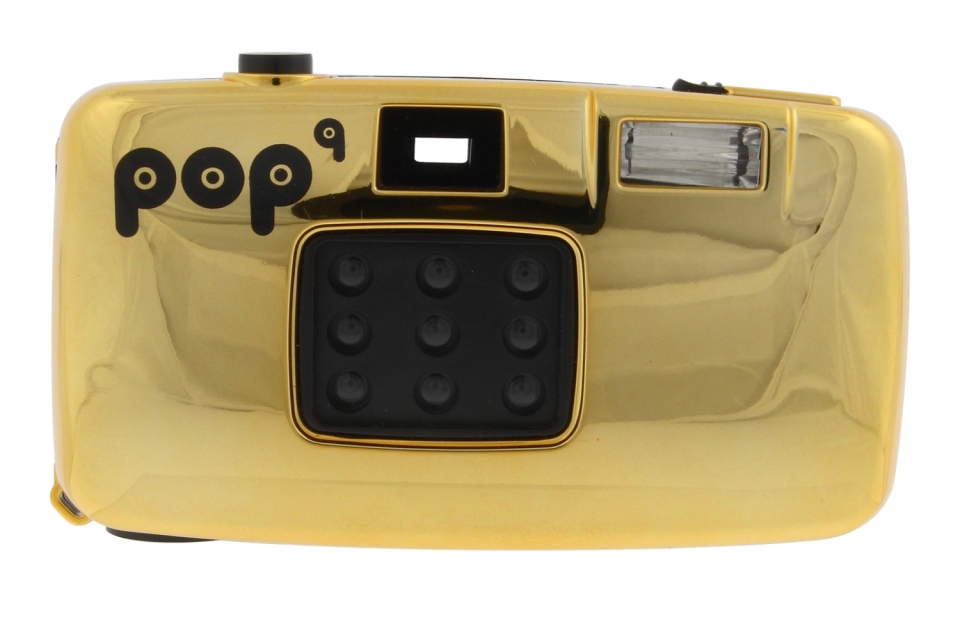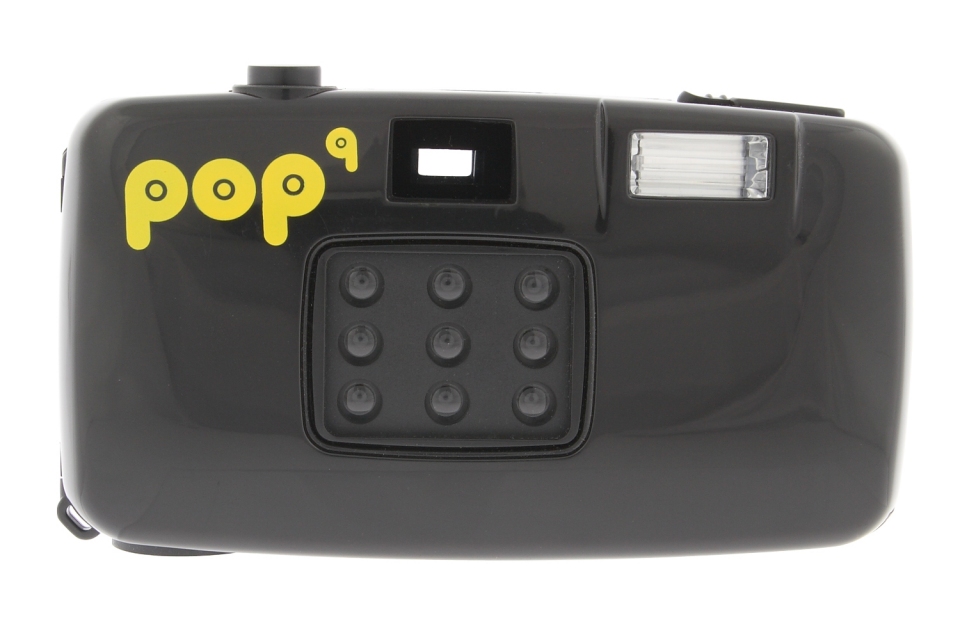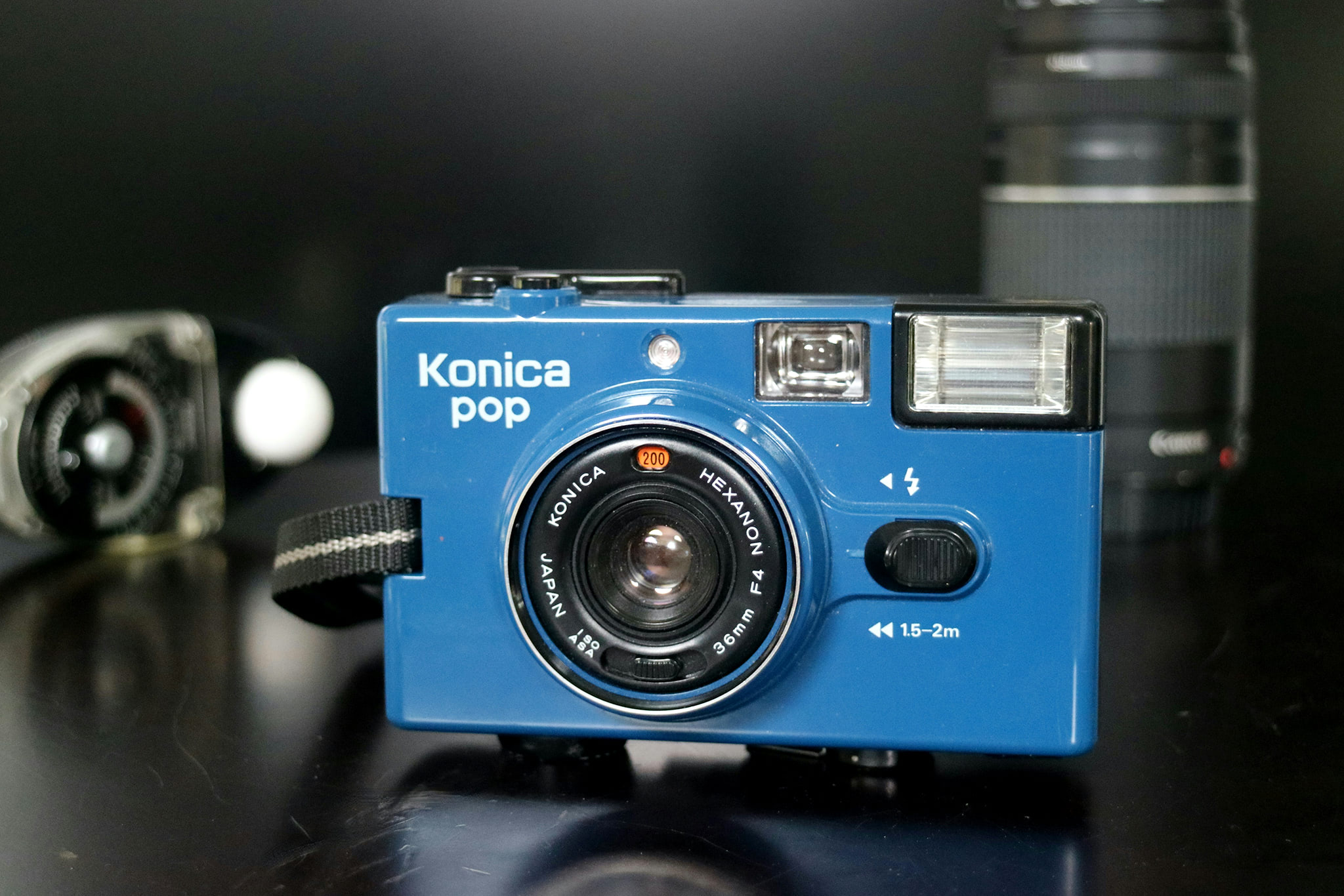
The Konica Pop 10 is a compact camera from the Japanese manufacturer. It was manufactured in the 1980s. It is an easy-to-use model. It was sold in red and black. Red versions were available as the Konica Dynamite and the Konica Tomato.
Lens
The camera is equipped with a fixed Konica lens with a focal length of 35 mm and a maximum aperture of f/4. The focus range extends from 1.5 meters to infinity. There is no autofocus function; focusing is achieved via a fixed focus. Since there is no filter thread, no filters can be screwed on.
A separate switch is provided for close-up shots at distances of 1.5 to 3.5 meters. A sliding cover protects the lens when not in use.
Exposure Settings
The Konica Pop 10 automatically controls the exposure. This model does not offer the manual settings found on SLR cameras. The shutter speed is fixed at 1/125 s. The aperture, however, varies depending on the film speed loaded and the current lighting conditions.
Flash System of the Compact Camera
An electronic flash is integrated into the Konica Pop 10. When using ISO 100 film, its effective range is 1.5 to 3.5 meters.
At close ranges between 1.5 and 2 meters, the flash intensity can be reduced using a compensation switch. A ready indicator informs you when the flash is charged and ready for use.
Tripod & Self-Timer
There is no connection thread for attaching the camera to a tripod. There is also no self-timer or socket for a cable or remote release.
Batteries
The Konica Pop 10 requires a power source for operation, especially for the flash. It uses a single AA battery (eBay / Amazon*) . This battery type is widely available and therefore easy to obtain.
Films for the Konica Pop 10
What film material is recommended for the Konica Pop 10? The compact camera is designed for use with 35mm film (35mm film).
Although the 35mm format has a long history, it continues to play an important role in analog photography. For this reason, various manufacturers still produce films in this format today.
Examples of suitable films include Kodak Gold 200* for color photos and Ilford HP5* for black and white photos. However, there are numerous other suitable films available from suppliers such as Rollei, Adox, Lomography, and Fujifilm.
Color films are developed using the C-41 process, a standard procedure offered by almost all photo labs. Black-and-white films can be developed in a variety of ways: You can either take them to a photo lab or develop them yourself at home with the necessary equipment.
The camera does not have a motorized film advance. After each shot, the film must be manually wound using a wheel on the back. When the film is full, it is manually rewound into the film cartridge using a crank.